Brand Est. 2014 Institutional Digital Asset Platform

An institutional digital-asset brand, ready to be activated.

Vintage. Disciplined. Architected for institutional capital.

// SatoshiFund — Strategy Architecture · Operating Heritage · Compliance Posture

SatoshiFund is an institutional-grade digital asset brand and multi-strategy platform, established in 2014. The strategy architecture spans Bitcoin core allocation, liquid macro overlay, on-chain yield, tokenized real-world assets (RWA), and structured capital across ten institutional modules. Designed to be activated by aligned institutional capital, a licensed counterparty, or a strategic acquirer with the regulatory infrastructure to deploy at scale.

SatoshiFund icon — gold orbital ring with central serif S mark, established 2014

// SatoshiFund · Brand Est. 2014

Why This Brand Matters

Three Pillars of Acquirable Value

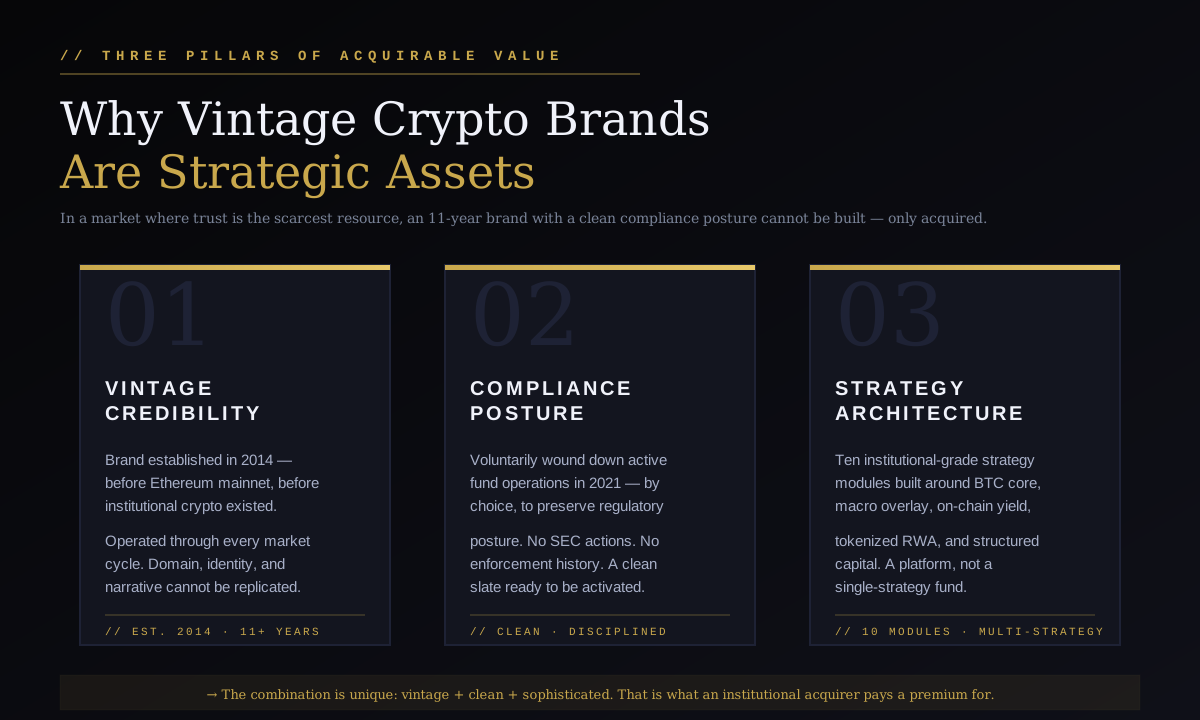
SatoshiFund is not a startup pitching a vision. It is a vintage institutional brand with operating heritage, a clean regulatory record, and a fully architected strategy platform — a rare combination in a market still defined by FTX-era reputational damage and post-2022 institutional caution.

Pillar 01

Vintage Credibility

Brand established 2014 — before Ethereum mainnet, before institutional crypto existed. Operated continuously through every market cycle, including the 2017 ICO boom, 2018 collapse, DeFi summer, the 2021 peak, and the 2022 implosion. Domain authority, identity, and narrative depth that simply cannot be manufactured.

11+ Years

// Continuous Brand Presence

Pillar 02

Compliance Posture

Active fund operations were voluntarily wound down in 2021 — a deliberate decision to preserve regulatory posture rather than operate without the licensing structure that institutional capital now requires. No SEC actions. No CFTC enforcement. No litigation history. The brand is dormant, ready, and exceptionally clean.

Zero

// Enforcement History

Pillar 03

Strategy Architecture

A multi-strategy platform spanning ten institutional-grade modules: Bitcoin core, liquid macro overlay, digital asset treasury, venture & token, on-chain yield, market-neutral basis, quantitative systematic, stablecoin cash management, tokenized RWA, and structured capital. A platform — not a single-strategy fund.

10 Modules

// Multi-Strategy Platform

Investment Thesis

Crypto is volatility.
Institutions require process.

SatoshiFund is designed to bridge the two — discipline-first, brand-first, architected for the regulatory and operational standards institutional allocators expect.

Three pillars of acquirable value: vintage credibility (11+ years), compliance posture (zero enforcement actions), and strategy architecture (10 modules)
FIG. 01 Why Vintage Crypto Brands Are Strategic Assets — Vintage Credibility · Compliance Posture · Strategy Architecture

Process Beats Hype

Repeatable underwriting, position sizing, liquidity planning, and clear decision rules — the things that compound when narratives shift and counterparties fail. Crypto rewards discipline more than conviction.

Conviction with Constraints

Digital assets deliver asymmetric upside. The institutional win is capturing that exposure while controlling survivability through stress testing, hedging logic, and concentration limits — not chasing maximum return.

Built for Institutional Fit

Brand architecture supports the pathways institutions recognize: documentation discipline, governance rigor, operational clarity, qualified custody, third-party administration, and partner-aligned execution from day one.

Strategy Architecture

Ten Strategy Modules.
One Coherent Platform.

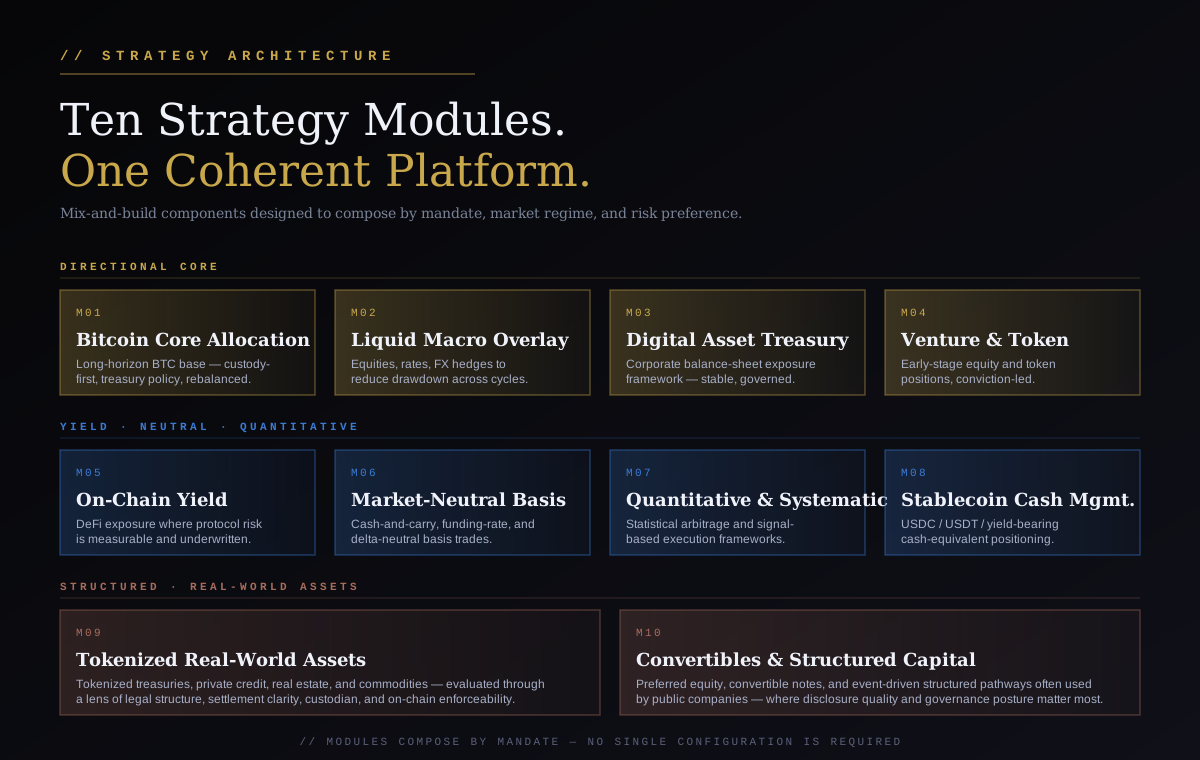
A mix-and-build component library designed to compose by mandate, market regime, and risk preference. No single configuration is required — the architecture supports allocators who want passive Bitcoin exposure as readily as those seeking multi-strategy with macro hedging and structured RWA tilts.

Strategy module taxonomy showing 10 institutional digital asset modules organized into directional core, yield and neutral, and structured real-world asset categories
FIG. 02 Strategy Module Taxonomy — Directional Core · Yield & Neutral · Structured & Real-World Assets
Active Capability

Module 01 · Directional Core

Bitcoin Core Allocation

A durable long-horizon Bitcoin base that anchors the book. Custody-first design with treasury policy, rebalancing rules, and liquidity planning aligned to the mandate. Bitcoin remains the only crypto asset with deep institutional infrastructure, ETF wrappers, and unambiguous regulatory clarity in the United States.

// CUSTODY-FIRST · LIQUIDITY-AWARE · TREASURY POLICY

Active Capability

Module 02 · Directional Core

Liquid Macro Overlay

Equities, rates, and FX hedges designed to reduce drawdown risk and improve risk-adjusted returns across volatile crypto cycles. The macro overlay is the single most under-appreciated tool in crypto fund construction — and the one that distinguishes a hedge fund from a long-only product.

// REGIME SIGNALS · CRISIS PLAYBOOKS · DRAWDOWN CONTROL

Active Capability

Module 03 · Directional Core

Digital Asset Treasury (DAT)

A corporate balance-sheet exposure framework — structured, governed, and reportable. Designed for public companies, family offices, and corporate treasuries that need crypto exposure without the operational overhead of building internal capability or accepting full-volatility direct holdings.

// CORPORATE TREASURY · GOVERNANCE-LED · REPORTABLE

Architecture in Place

Module 04 · Directional Core

Venture & Token Strategy

Early-stage equity and token positions in protocols and infrastructure — conviction-led, thesis-driven, with multi-year illiquidity tolerated in exchange for asymmetric upside. The architecture supports both equity SAFEs and token warrants alongside liquid secondary positioning.

// EARLY-STAGE · THESIS-DRIVEN · MULTI-YEAR HORIZON

Architecture in Place

Module 05 · Yield & Neutral

On-Chain Yield (Selective)

DeFi exposure only where risk is actually measurable — protocol quality, counterparty concentration, liquidity locks, smart contract audit history, and exit assumptions are stress-tested before any deployment. The 2022 collapse made clear which DeFi yield was real and which was leverage in disguise.

// UNDERWRITTEN · STRESS-TESTED · EXIT ASSUMPTIONS

Architecture in Place

Module 06 · Yield & Neutral

Market-Neutral Basis

Cash-and-carry arbitrage, perpetual funding-rate harvesting, and delta-neutral basis trades that aim to generate consistent returns regardless of spot direction. Sharpe ratios in this category have historically run roughly 2x long-only crypto with a fraction of the drawdown profile.

// CASH-AND-CARRY · FUNDING RATE · DELTA-NEUTRAL

Architecture in Place

Module 07 · Yield & Neutral

Quantitative & Systematic

Statistical arbitrage, signal-based execution, and systematic rebalancing frameworks. Quantitative crypto strategies were the highest-performing category across 2025 — combining 24/7 markets, cross-venue inefficiencies, and increasingly sophisticated AI-driven signal extraction.

// STAT ARB · SIGNAL-BASED · 24/7 EXECUTION

Active Capability

Module 08 · Yield & Neutral

Stablecoin Cash Management

USDC, USDT, and yield-bearing stablecoin positioning as cash-equivalent infrastructure. Circle and Tether collectively settle more annual transaction volume than Visa — stablecoins are the institutional rails. The architecture supports both fiat-backed and tokenized treasury positions.

// USDC · USDT · YIELD-BEARING · T+0 SETTLEMENT

Architecture in Place

Module 09 · Structured

Tokenized Real-World Assets

Tokenized treasuries, private credit, real estate, and commodities — evaluated through a lens of legal structure, settlement clarity, custodian quality, and on-chain enforceability. RWA tokenization is the single largest institutional crypto thesis of this cycle, with Ondo, Securitize, and BlackRock's BUIDL leading category formation.

// LEGAL WRAPPER · CUSTODIAN · ENFORCEABILITY

Architecture in Place

Module 10 · Structured

Convertibles & Structured Capital

Preferred equity, convertible notes, and event-driven structured pathways often used by public companies — where disclosure quality, governance posture, and downside protection matter most. This module bridges traditional capital markets discipline with digital asset upside.

// CONVERTIBLES · PREFERRED · EVENT-DRIVEN

The platform is capital-structure agnostic. Modules compose by mandate — risk-tolerance, liquidity needs, jurisdiction, and counterparty preference all shape the configuration. There is no single "SatoshiFund strategy." There is an architecture.

Reference Allocation Model

A Sample Framework.
Illustrative Only.

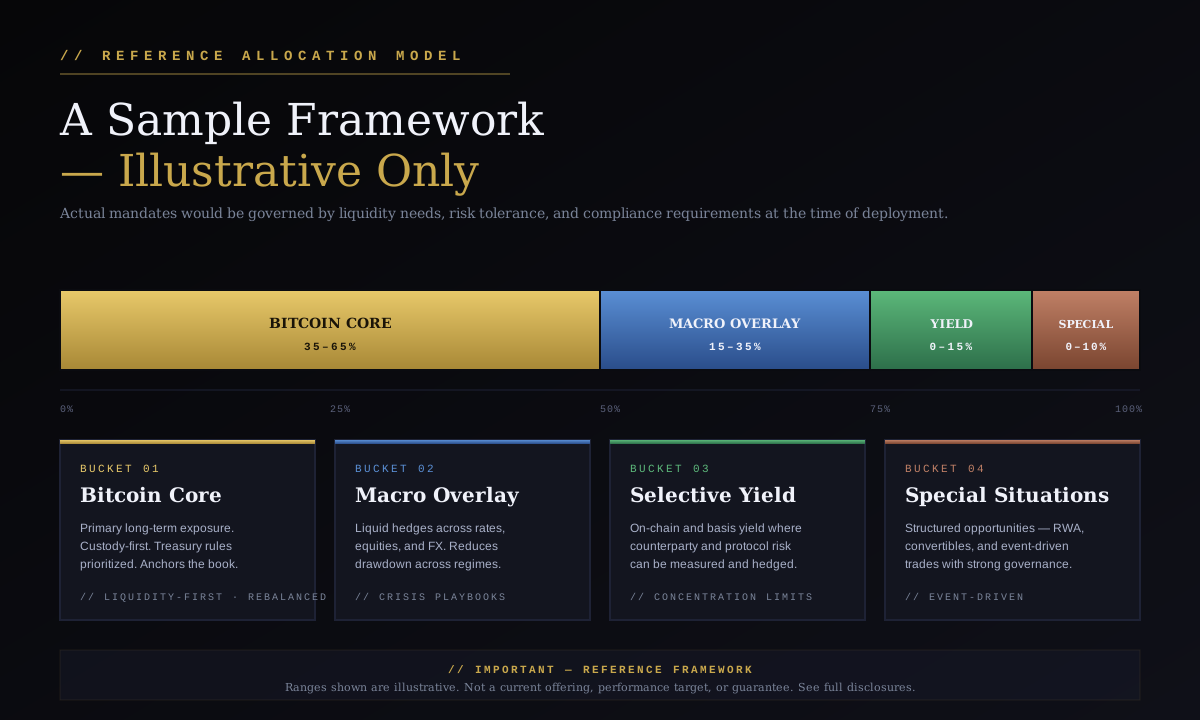
Actual allocations — if and when offered — would be determined by mandate, risk tolerance, liquidity needs, and the regulatory requirements applicable to the deploying counterparty. The model below shows how the modules typically compose for a balanced institutional crypto allocation.

Reference allocation model: Bitcoin Core 35-65%, Macro Overlay 15-35%, Selective Yield 0-15%, Special Situations 0-10%
FIG. 03 Reference Allocation Framework — Bitcoin Core · Macro Overlay · Selective Yield · Special Situations

This framework is not a current offering. It is a reference architecture — the kind of allocation an institutional crypto platform of this vintage would naturally support. Any future offering would be constructed only through appropriate legal documentation, with disclosures tailored to the specific deploying entity and jurisdiction.

Investment Process

A High-Trust Narrative
Demands a Real Operating Model.

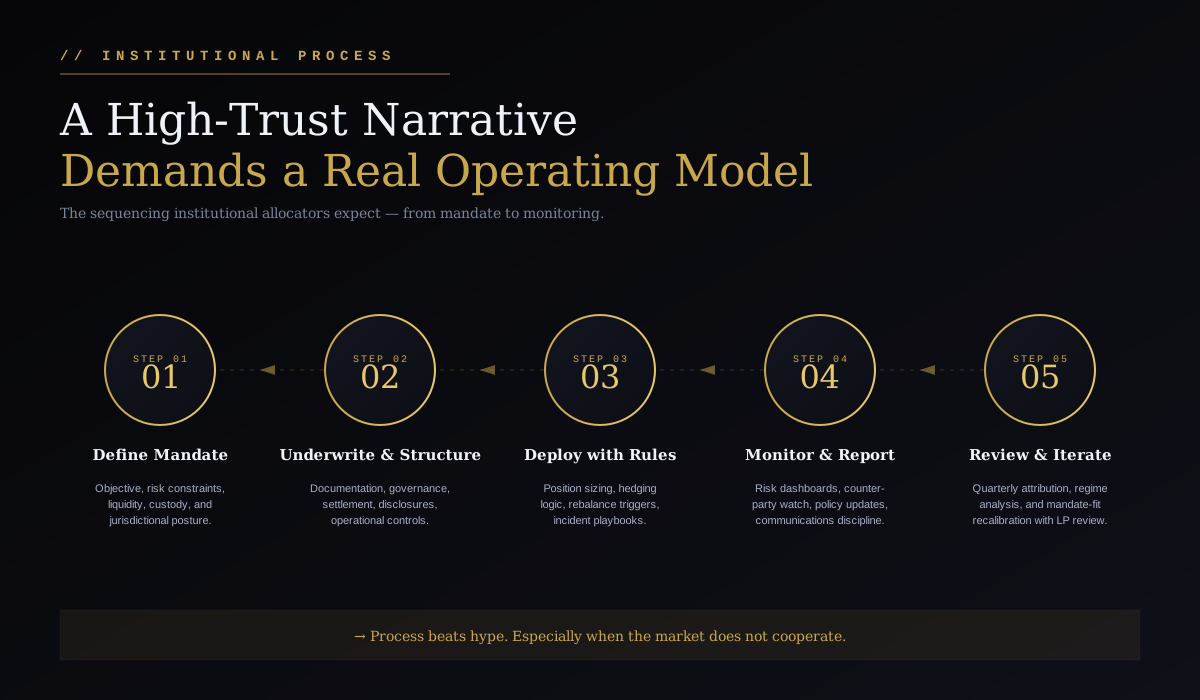
From mandate definition to LP review — the sequencing institutional allocators expect, with documentation and governance discipline at every step.

Five-stage institutional investment process: define mandate, underwrite and structure, deploy with rules, monitor and report, review and iterate
FIG. 04 Five-Stage Institutional Process — Define · Underwrite · Deploy · Monitor · Iterate
  1. 01

    Define Mandate

    Objective, risk constraints, liquidity, custody arrangement, counterparty policy, and jurisdictional posture established before a single dollar deploys.

  2. 02

    Underwrite & Structure

    Legal documentation, governance framework, settlement architecture, regulatory disclosures, and operational controls fully papered.

  3. 03

    Deploy with Rules

    Position sizing logic, hedging triggers, rebalance thresholds, and incident playbooks codified — not improvised in the heat of the market.

  4. 04

    Monitor & Report

    Risk dashboards, counterparty watch lists, NAV reporting, communications discipline, and policy updates on a defined cadence.

  5. 05

    Review & Iterate

    Quarterly attribution analysis, regime review, mandate-fit recalibration, and LP communication — every cycle, no exceptions.

// Infrastructure & Counterparty Stack

The Institutional Rails We Architect Around

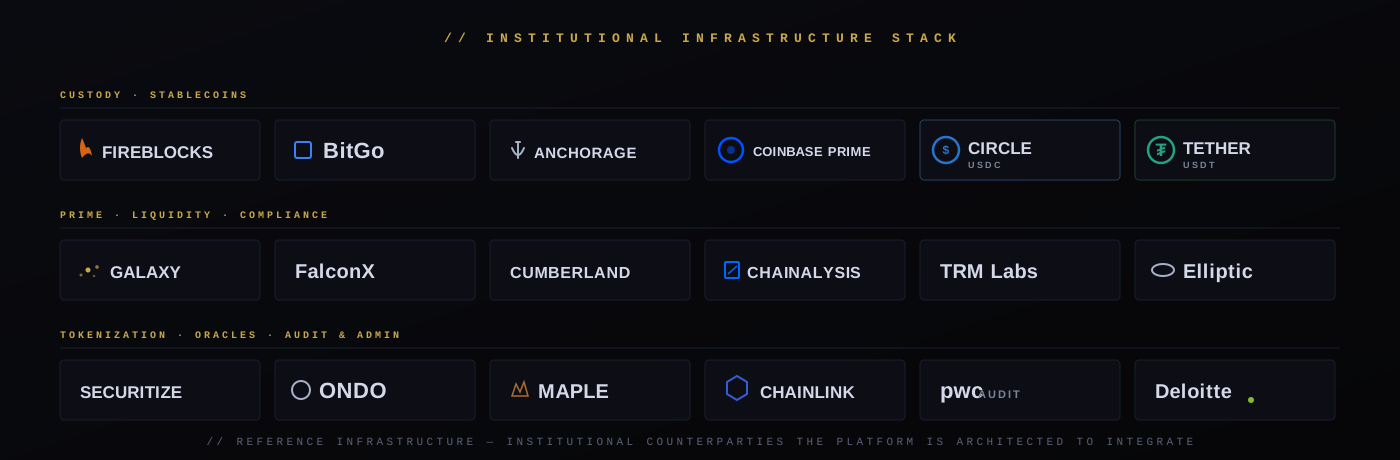
SatoshiFund is designed to integrate with the institutional crypto stack that has emerged since 2020 — qualified custodians, prime brokers, stablecoin issuers, compliance providers, tokenization platforms, and Big-4 audit firms. These are reference counterparties the platform is architected to operate alongside.

Institutional infrastructure stack including Fireblocks, BitGo, Anchorage, Coinbase Prime, Circle USDC, Tether USDT, Galaxy, FalconX, Cumberland, Chainalysis, TRM Labs, Elliptic, Securitize, Ondo, Maple, Chainlink, PwC, and Deloitte

// Reference infrastructure · Counterparties shown indicate architectural fit, not active relationships or endorsements

Operational Architecture

Six Layers — From Custody to LP Reporting.

The stack an institutional allocator inspects before signing a subscription document — and the architecture SatoshiFund is built around.

Six-layer institutional infrastructure stack from foundation (legal structure, fund admin, audit) through custody, prime brokerage, compliance, strategy execution, and LP reporting
FIG. 05 Institutional Infrastructure Stack — Foundation · Custody · Prime · Compliance · Execution · Reporting

This is the architecture. Activating it requires a licensed counterparty — a registered investment adviser, a chartered trust company, an SEC-regulated entity, or a strategic acquirer with the regulatory infrastructure to deploy at scale. SatoshiFund.com brings the brand, the architecture, and the heritage. The right partner brings the license.

Operating Heritage

The Record Speaks for Itself.

Every credential is verifiable on the public record — on-chain, in exchange listing histories, in government contract databases, and in court filings. Eleven years of continuous brand presence, with deliberate posture management at every inflection point.

2014

Brand Established

Among the earliest crypto fund brands. Pre-Ethereum era.

2013

Crypto-Native Origin

Founder operating in crypto since 2013 — before institutional adoption began.

7+ yrs

Active Operating Period

Continuous fund operations 2014–2021 across multiple market cycles.

Zero

Enforcement Actions

No SEC, CFTC, FinCEN, or state regulatory actions on record.

2013

Founder Enters Crypto · Founds HempCoin (THC)

Tim Renzetti enters the crypto market in 2013 — before Ethereum existed. Founds HempCoin (THC), a fair-launch Layer-1 blockchain among the first 30 ever created. Verifiable on-chain and in exchange listing records.

2014

SatoshiFund Brand Established

SatoshiFund founded as one of the earliest brand platforms for digital asset strategy — at a moment when "institutional crypto" was a phrase that did not yet exist. Brand presence has been continuous since.

2014–2021

Active Fund Operations

Operated active digital asset fund strategies across the 2017 ICO cycle, the 2018 collapse, the 2019 recovery, the 2020 institutional onramp, the DeFi summer, the NFT cycle, and the 2021 peak. Multiple full market cycles of operating experience encoded in the architecture.

2017

HempCoin Listed on Bittrex

HempCoin (THC) listed on Bittrex Exchange — verifiable in publicly archived exchange records and CoinMarketCap historical data.

2018

HempCoin Peaks at $170–200M Market Cap

Verifiable on CoinMarketCap historical data. Demonstrates direct operating experience with token-launched assets at meaningful scale.

2021

Voluntary Wind-Down of Active Fund Operations

Active fund operations were voluntarily wound down — a deliberate decision to preserve regulatory posture as SEC and state-level enforcement intensified. The brand and architecture were preserved intact, ready to be activated through a licensed counterparty when the regulatory environment matured.

2022–2024

Brand Maintained Through Industry Stress

Through the FTX collapse, Terra/Luna implosion, Celsius, Genesis, BlockFi, and the broader 2022 crypto bear market — SatoshiFund had no exposure, no client losses, and no reputational damage. The decision to wind down in 2021 looks, in retrospect, exceptionally well-timed.

2025–Today

Platform Posture & Partnership Pathway

Brand and architecture are being positioned for activation through aligned institutional capital, licensed counterparty partnership, or strategic acquisition by a fund or financial institution with the regulatory infrastructure to deploy at scale.

The Architect

About Tim Renzetti

Tim Renzetti

// Founder & Brand Steward

  • SatoshiFund founder · Brand Est. 2014
  • Crypto-native operator since 2013
  • Founded HempCoin — one of first 30 blockchains
  • HempCoin peaked at $170–200M market cap
  • $60M international business operator (AutoVid)
  • $15M+ DoD & US government contracts
  • 14,500+ verified LinkedIn industry network
Verify on LinkedIn

See 14,500+ connections, the full HempCoin history, every industry leader Tim has worked alongside since 2013, and the complete verifiable career record.

14,500+

Verified industry network · View profile →

// The Differentiator

Two Profiles. One Operator.

Crypto operators typically come from one of two profiles: technically deep but commercially unproven — protocol-fluent but with no operating record on real-world capital — or generalist financial professionals who learned crypto recently — institutionally credentialed but lacking the operational depth to evaluate a counterparty's actual risk profile.

Tim is neither. He launched a Layer-1 blockchain in 2013, before Ethereum existed. He watched every market cycle from inside the operating seat — the 2017 ICO boom, the 2018 collapse, DeFi summer, the NFT cycle, the 2021 peak, the 2022 implosion, and the institutional onramp now underway. And he has built and operated international businesses, closed multi-million-dollar government contracts, and managed cross-border operations across 15+ countries. That dual-profile combination is structurally rare in the crypto fund category — and it is exactly the operator profile institutional acquirers look for when evaluating a brand acquisition.

// Career Timeline

Built from the Ground Up.

  1. 2002

    Founded AutoVid

    International salvage vehicle export operation scaled to $60M annual revenue across 15+ countries over 19 years.

  2. 2003

    First Federal Contracts

    $15M+ in US government contracts including Lockheed Martin · NASA MSFC IT engagement.

  3. 2013

    Founded HempCoin (THC)

    Fair-launch Layer-1 blockchain — among the first 30 ever created. Listed on Bittrex. Peaked at $170–200M market cap.

  4. 2014

    Founded SatoshiFund

    Established the SatoshiFund brand and digital asset strategy platform — among the earliest crypto fund brands in existence.

  5. 2014

    Founded SatoshiFirm

    Sister consulting practice serving enterprises, regulated industries, and government contractors entering blockchain.

  6. 2021

    Voluntary Wind-Down

    Active fund operations wound down by choice to preserve regulatory posture and brand integrity.

  7. Today

    Brand Steward · Partnership Architect

    Positioning the SatoshiFund brand and architecture for institutional partnership, licensed activation, or strategic acquisition.

Partnership Pathways

Open to the Right Structure.

SatoshiFund is positioned for serious counterparties exploring institutional digital asset strategy — whether through partnership, license, joint venture, or strategic acquisition. The brand, the architecture, and the heritage are ready. Each pathway below represents a structure under active consideration.

Pathway 01

Strategic Acquisition

For licensed funds, asset managers, or financial institutions seeking to acquire an established crypto-native brand with eleven years of vintage and a clean compliance record. The acquirer brings the license and capital infrastructure; SatoshiFund brings the brand, the architecture, and the heritage.

  • Outright brand acquisition with full IP transfer
  • Domain, identity system, and architectural assets
  • Founder transition support during integration
  • Optional advisory continuation post-close

Pathway 02

Brand License & JV

For licensed counterparties who want to operate a digital asset fund or platform under the SatoshiFund brand without acquiring it outright. A long-term licensing arrangement or joint venture structure allows the licensed partner to deploy at scale while ownership remains with the brand steward.

  • Long-term brand license with revenue share
  • Joint venture structure with shared governance
  • Sub-advisory arrangements with regulated entities
  • White-label deployment for institutional platforms

Pathway 03

Capital Partnership

For institutional capital — family offices, sovereign-adjacent vehicles, or anchor LPs — seeking to back the activation of an established crypto brand with a licensed operating partner. Capital, license, and brand combine into a deployable platform with first-mover positioning in a maturing institutional crypto market.

  • Anchor LP commitment with brand alignment
  • Co-GP structure with licensed counterparty
  • Founding investor positioning at activation
  • Strategic positioning before institutional onramp accelerates

Pathway 04

Operator Integration

For licensed funds or asset managers seeking to bring the founder onto their existing platform — alongside the brand — as a senior advisor, operating partner, or strategic hire. Integration brings crypto-native operating depth and a vintage brand asset under the acquirer's regulatory umbrella.

  • Founder joins acquirer in operating role
  • Brand integrated as a strategy or product line
  • Crypto-native operating depth alongside brand vintage
  • Mutually negotiated equity and economics

If you are exploring a compliant fund pathway, a public-company digital asset strategy, structured capital in the digital asset space, or a brand acquisition — let's talk.

Frequently Asked Questions

Clear, Candid Answers.

Optimized for credibility and serious counterparties. If you are exploring a partnership or acquisition conversation, these are the questions that come up first.

No. Active fund operations were voluntarily wound down in 2021 to preserve regulatory posture. SatoshiFund.com is currently an institutional-grade brand and strategy platform — informational in nature, with the architecture preserved for activation through a licensed counterparty. Any future regulated offering would be created only with appropriate legal structuring, registration, disclosures, and documentation.

It was a deliberate compliance decision. By 2021, the regulatory environment for unregistered digital asset funds was deteriorating — and SEC enforcement against unlicensed managers subsequently accelerated. Operating without an appropriate registration structure was judged to be an unacceptable risk to brand integrity, founder credibility, and any future institutional pathway. In retrospect — given the FTX collapse and the wave of enforcement actions that followed — the decision now reads as exceptional discipline.

No performance is published or marketed. Digital assets involve significant risk, including risk of total loss. Past performance is not indicative of future results. Any future communication regarding performance — by SatoshiFund or any successor entity — would be presented through compliant, properly sourced disclosures appropriate to the offering structure and the deploying counterparty's regulatory framework.

Licensed asset managers, registered investment advisers, chartered trust companies, public-company strategy desks, family offices, fund-of-fund allocators, and strategic acquirers exploring digital asset platforms. The common thread is regulatory and operational seriousness — counterparties with the licensing infrastructure and governance posture to deploy at institutional scale.

In a market where trust is the scarcest resource — and where FTX, Terra, Celsius, BlockFi, and Genesis all imploded within an 18-month window — a long-standing brand with a clean compliance record is a strategic asset. It supports credibility with allocators, distribution with institutional counterparties, and premium positioning in a category where post-2022 reputational damage continues to depress new-entrant trust. Vintage cannot be manufactured. It can only be earned over time — or acquired.

Independent sister brands sharing a common founder. SatoshiFirm.com is an active blockchain consulting practice serving corporate boards, government contractors, and regulated industries. SatoshiFund.com is the institutional digital asset brand and strategy platform. The two operate independently — separate brands, separate positioning, separate counterparty conversations — though they share founder DNA, design language, and a common heritage going back to 2013.

The structure is open and negotiable. Acquisition pathways include outright brand transfer, long-term licensing with revenue share, joint venture with shared governance, anchor LP commitment, or operator integration where the founder joins the acquirer's platform. Each pathway carries different economics and integration timelines — the right structure depends on the counterparty's regulatory posture, capital structure, and strategic objectives. A confidential 30-minute conversation is the fastest way to determine fit.

SatoshiFund icon

// Begin the Conversation

Ready for a
Serious Conversation?

Schedule a confidential 30-minute introduction. We will discuss positioning, partnership structure, and whether SatoshiFund is the right fit for what you are building. No pitch — a candid conversation between serious counterparties.

Tim Renzetti · Founder & Brand Steward
info@satoshifund.com · partnerships@satoshifund.com
· Brand Est. 2014